
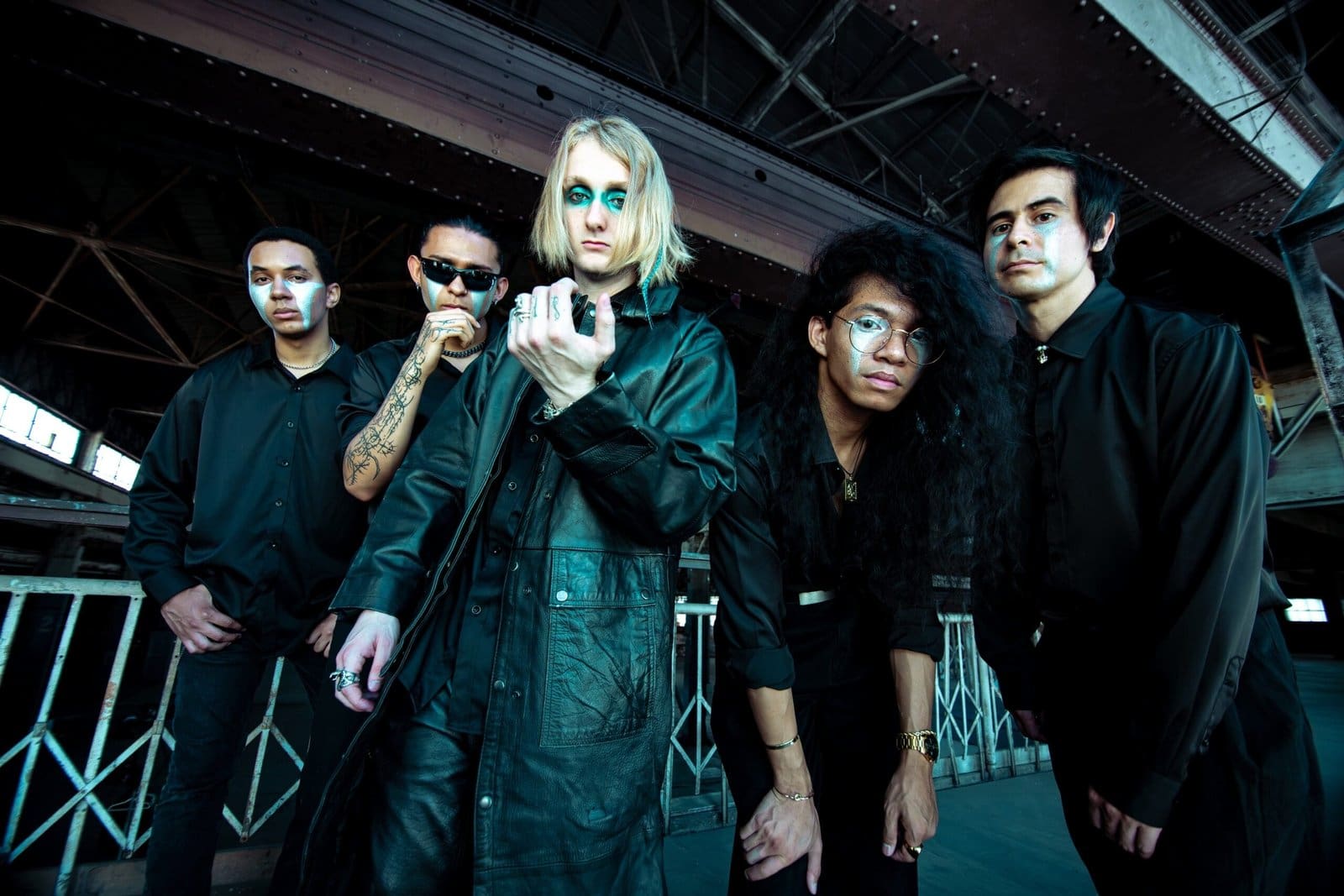
Atlas Artist Group: We last spoke nearly six years ago and so much has happened since then. What has your musical journey been like since 2020 that ultimately led to this album?
Finnegan Bell: During the pandemic, Love Ghost released a song called “I’ll Be Fine” that went kind of viral on YouTube. But the thing was that a lot of the comments were in Spanish- come to Mexico, we want to see you in Mexico, etc. It catapulted into this thing where I was like, I want to explore this some more because I’m based in Los Angeles- Tijuana is just a three hour drive. I started DMing artists in Mexico about making a song and I made a collab with Adán Cruz, who’s an artist down there in Mexico. He said, why don’t you just come down here for a little bit? Why don’t you just live with me? So I did. I moved to Mexico. I left everything behind that I had known and I started teaching myself Spanish. There was like this crazy period of my time [when] I was living in this abandoned elementary school in Mexico with all these other musicians and I was just collabing with people all the time. From there, I started to build this cult fanbase in Mexico.
I started going on tour there a lot and I would play in Monterrey and Guadalajara and Mexico City and all these different places. I just felt very welcome there and didn’t really experience that [dangerous] side of it too much. A lot of other stuff happened in the meantime, too. I made an album with Tim Skold from Marilyn Manson and I even went to the UK and I did a tour with The Skinner Brothers and just a lot of collabs. I made a collab with Rico Nasty, probably shortly after we spoke in 2020.
This album was like returning to my roots in a way because I had done so many things away from home, with other people. When I started writing music, it was just an avenue for me to work through my depression, my anxiety, my trauma- just me and an acoustic guitar and just playing at random backyard shows in L.A. or Pasadena, where I grew up playing at coffee shops.
I just wanted to reconnect with that part of myself so I made this album Thirteen. It’s 13 songs, it comes out on Friday the 13th, obviously 13 is an age where we’re going through our adolescence- there’s a lot of changes and there’s a lot of feelings of not belonging. In the past few years, as I’ve been on this nomadic journey, I too at times have felt like that.
And here we are. I’m really excited for it. It’s definitely a more vulnerable record. It’s primarily an acoustic album and I’m just really showing my true thoughts and feelings in a way that maybe I wouldn’t normally do.
Atlas: How did this record come together for you? You mentioned going back to your roots- what influences were you pulling from for this album?
Bell: One thing about this album is that it’s- for lack of a better term- I would almost call it a conceptual album, because before I had even written the lyrics, I basically had all these pictures on a mood board of like dilapidated houses in the Midwest and the South and that part of America. That’s what I’d say- before there was even a sound of music, the visuals and the vibe and feeling of what I wanted it to be was already created.
There’s definitely a lot of Midwest emo, even Midwest grunge in the sound of it and the production of it and the influence of it. I’d say it came to be because a few years ago, I made this song called “Angelic”. It’s an acoustic song and it did pretty well for me on streaming and also at shows. I noticed that it was always a moment [when] people would shine their lights and sway back and forth. What if I honed in on this melancholy, acoustic, dilapidated house kind of feeling and just made an entire album and entire world with visuals around it. That’s how Thirteen came to be.
Atlas: Is there a song or songs that you particularly connect to on this album?
Bell: There’s a few, but I would say a song called “Turpentine This House”. It’s a really personal song to me for a number of reasons. Part of it even has a literal journal entry in it at the end of the song. It was also inspired by the Eaton fire- my family was displaced from the Eaton fire in Altadena and they were living in a hotel for a year and there’s a little bit about my experience of dealing with that. Turpentine is actually an industrial grade cleaning solution that can damage the material that it’s cleaning if used wrong, like the metal or the wood, etc. That felt in a way like a metaphor for how I was coming to terms with my past or my traumas- sometimes in the process of healing, I was damaging myself more at times.
Atlas: With new listeners coming in as you release more music, which song would you pick to introduce them to the world of Love Ghost?
Bell: I would definitely say “Turpentine This House” for sure. But also, I would say, our songs “Worth It” and “Fade Away” definitely hit at the ethos of what the world of Love Ghost is. That melancholic, emotional longing vibe of the music is really captured in those two particular songs.
Atlas: You’ve been pursuing this project for a significant portion of your life now and it’s a huge creative endeavor for you. How do you approach music now as opposed to when you started? What has Love Ghost come to mean to you in that time?
Bell: I think it means everything to me. Love Ghost started out originally as an alter ego and then it became a full band and now it almost feels like it’s just an extension of myself. When I first started writing music, it really came from a very emotional place. It was creating art driven off of my feelings. As I got older, it’s still a very emotional process and it’s still emotionally driven, but I got more so into the science of it and the logic of it and the audio engineering.
If you go deep into it, the science of the hurts and how it affects the mind- or even just the audio engineering process- that whole process, to me, is something that I just slowly became obsessed with. Recording my own vocals, engineering my own vocals and doing it in a DIY process lent me to have so much more creative freedom. I would say that’s what the difference has been over the years. At first, it was only on the left side of my brain- it was just an emotional, creative thing and now it’s both. It’s a logical, scientific thing. It’s a technical thing and emotionally driven thing.
Actually, this whole album, I engineered all parts of it by myself. It was just me and my desktop just going crazy every night engineering my vocals, engineering my guitar parts. I think that lends itself to how raw it feels.
Atlas: Are you planning any live shows around the new music? Is there anybody you’d love to share the stage with?
Bell: Absolutely- we are trying to set up a tour for next year in Europe again. That would be really exciting. That would be really cool. But nothing’s announced yet. Nothing’s even set in stone at the moment. Any opportunity to open up for a bigger band is always really cool and really fun. I’m open to anything that comes my way.
Atlas: Is there anything else that you want people to know now about you or your music or is there anything that you wish you got to talk about more that people might not ask?
Bell: There’s a lot! I think one thing with my music that people might not understand is sometimes the genre-bending nature of it and how different the songs can be.
If someone that doesn’t know me is interested in my music and wants to check it out, maybe they check out the top two songs on Spotify at the moment and it doesn’t resonate with them, maybe give it more of a shot. Maybe you’re more into softer music, like what’s on Thirteen. Maybe you’ll be more into the industrial stuff, maybe you’ll be more into the Latin club.
I guess that’s one misconception about me is just being misunderstood and being pigeonholed into one thing because I have one song that sounds like that. It’s cool when I find someone that really gets it and is open to the different avenues of creativity and exploration that my catalog can have at times.
One thing that I wish more people knew about me- that’s a good question. I’m just telling these songs and getting my story out there more- I mentioned a little bit about struggling with Crohn’s disease or when my family was displaced and even a period of time when I was living in an abandoned elementary school in Mexico. At times I just feel like I have this underdog spirit in me and I hope that that part comes across and resonates with people still.
Stream Thirteen, out now!
