
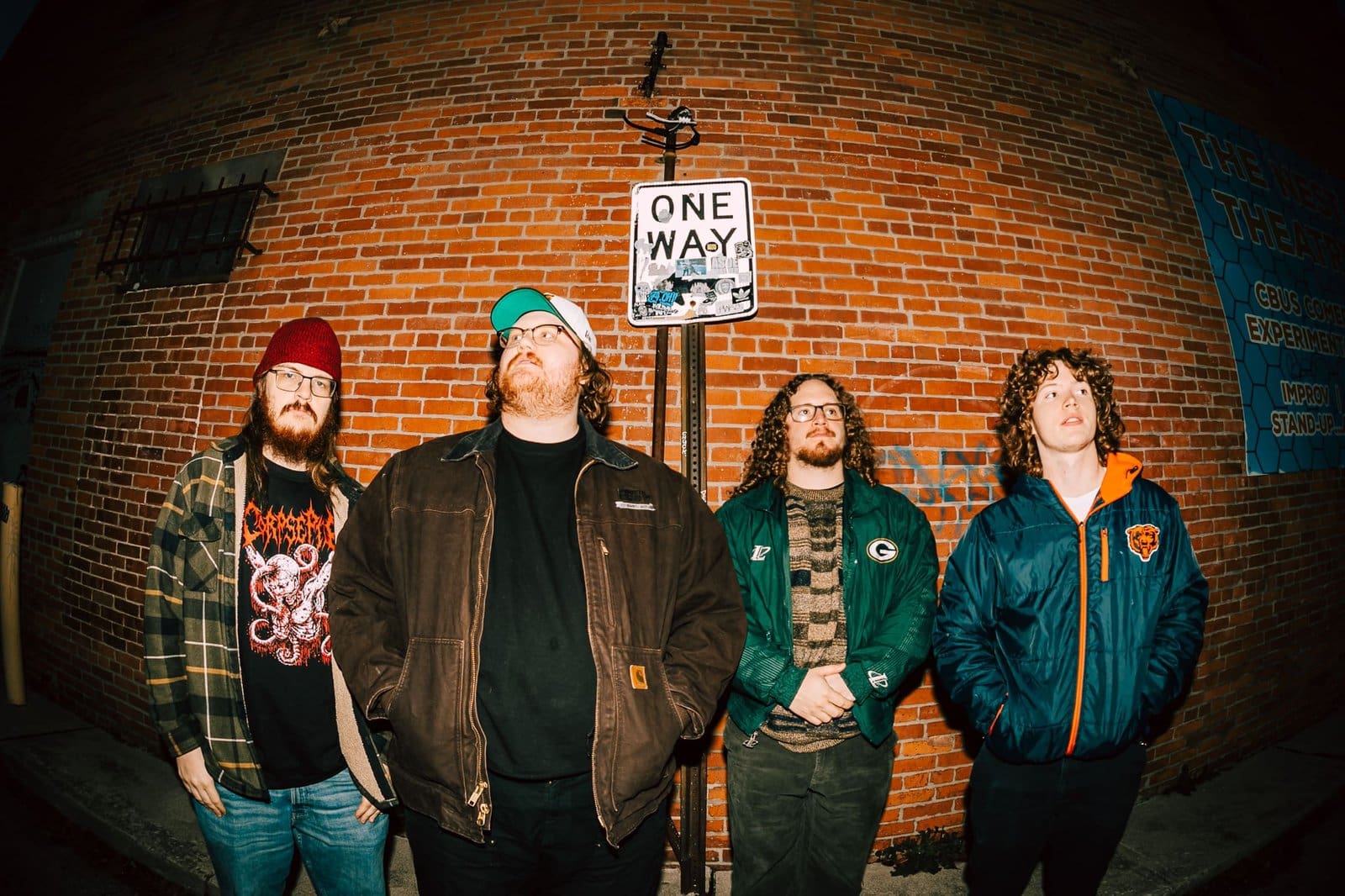
Harrison Gordon is a guy and Harrison Gordon is also a band. The punk rockers have released their latest album, BLISS, taking themes of self-doubt, confronting the nostalgia of the past and searching for something more and combining them into 11 raw, powerful songs. From their roots in the DIY scene to their upcoming headlining tour, Harrison Gordon might be six years into this journey, but they are very much just getting started. We chatted with Gordon (the man) about the record making process, finding inspiration on the road and the band’s future goals.
Atlas Artist Group: This project is about six years old now, right? Was the beginning of this journey the result of the pandemic or was it an idea you’d been tossing around and just decided to go all in?
Harrison Gordon: I’ve been putting songs out on SoundCloud since probably 2017 or 2018, all in the same style of the stuff we do now- there’s not been a grand departure. The pandemic made me really want to get into music production stuff, and so I took a couple songs I wrote in high school and I was like ‘I’m going to make these sound like professional songs because I’m really good at this now’ and then I put them out. It’s so funny to now listen back to the really early recordings-I was like, this is great, this sounds awesome.
But yeah, I’ve been writing songs and releasing stuff for this project since I was a sophomore or junior in high school, I think.
Atlas: Now that you’re six years into this and you’ve got the band behind you, how do you describe this project now as opposed to what you would have said then?
Gordon: Back then, I was trying to make indie rock because I was afraid to make stuff that was super emo or punky, because the only people at the time that were going to ever listen to it were people that I knew in my personal life. I think I was a little afraid of being judged if I made some stuff that sounded too screamy or loud. I gravitated towards making a slightly softer kind of indie rock thing. I’m really lucky in the way that it’s basically just moved in the direction that I wanted it to move.
Every step we’ve taken has been in the direction I want us to go. Everything I’ve been trying to get sound-wise has culminated into this project.
Atlas: It’s great that this is the direction that you’ve taken, because you have influences in this sphere as well, right?
Gordon: Oh yeah- I mean, our biggest influences are Joyce Manor and Pup and Jeff Roseenstock- all that indie punk revival is where my whole background is. When I started the project, that’s what I was listening to. I just didn’t know how to make stuff that sounded like that without really ripping it off and I think it took this long to finally get to a point where I feel like we’re making comparable stuff to a lot of those bands. I went to see Jeff Rosenstock not too long ago and a ton of the people at the show were like, oh, I like your band.
Atlas: Target audience reached.
Gordon: Yeah, exactly. It helped with my imposter syndrome a little bit because if the people who like Jeff like me, then I think it puts me in swinging distance.
Atlas: One of the themes you’ve mentioned for this album is self-loathing- and it really is a beat yourself up record. What was your creative process for this one? Do you take a more lyrical approach first or does the music inform the lyrics?
Gordon: It really depends- a lot of times it’s both. I usually have to come up with some sort of instrumental thing before I can start writing lyrics. I usually do it all on an acoustic guitar or an electric guitar, like at the same time. I just don’t know how to do the ‘make a song and put lyrics over top of it later’ thing that a lot of bands do.
I also don’t know how to do the ‘write lyrics on your phone or write them down and then turn it into a song’. Neither of those really work for me. I kind of just have to do what I think is the old fashioned way, which is just to sit down and Bob Dylan it out.
The best way to do it is just sort of bullshit your way through some chords and make a verse and a chorus. If I do that for 20 minutes and I’m just doing it a couple of times, I’ll usually come up with one line, even if I’m mumbling some random shit. I’ll just come up with something like throwing random non sequitur lines together and then I’ll eventually have one where I’m like, I really want to keep that one. Now it’s a battle of what’s the song going to be about?
I would record these demos and I’d send them off to the band and I’d be like, I really hate this one part, but I like this part. But I tend to do most of my writing alone and that’s where I usually can visualize best. Then when I bring it to people, that’s when whatever idea you have gets scrutinized enough that it can become something more interesting than you’re capable of just making by yourself.
Atlas: Out of all the songs on this album, which one do you find the most connection with personally? What are you hoping that your listeners will take away from it?
Gordon: That’s a good question. There’s a song in the very middle of the record called “Scab” and I think I connect with it the most because it’s the last one I wrote for the record. A lot of times the last song on a record written is a lot of times the best one. I don’t know how that happens.
But I started writing it and it was supposed to be about somebody from your hometown that is never going to leave and doesn’t understand why other people are going to leave. Not that I thought that was a bad thing, but I pivoted away to a song about items that you have and memories that you have that eventually you either have to throw away or else you’re just going to have a collection of bullshit like I have back here. A lot of this is merch, but some of this is just old sentimental garbage. It’s just stuff that’s important to me because it has some ties to my family or my childhood or something but it doesn’t do anything for me and there’s no reason to keep it. It’s a song from the perspective of those items that know they should be thrown away and it’s about keeping baggage and carrying it with you.
I have a couple people in my family that maybe hold on to a little bit too much crap and I sense it as I get older that I’m becoming one of them. It’s cool because writing it was a tool I used to unpack some of that stuff that I didn’t really know I was feeling as heavily as I was. That’s unique to writing as an exercise in general- there’s a lot of times that you can write something subconsciously and then when you think about it, you can realize it has a lot of psychological implications on you as a person. It’s a weird form of therapy.
The other thing is if I’m writing a song and it’s not moving me, then I give up on it pretty much because if I don’t get a chill while I’m making something, then I probably wouldn’t listen to it because I only try to listen to music that really invokes something out of myself. You’ve just got to keep that standard and I think that’s a key to writing.
Atlas: How do you approach touring at this point? You’re spending a lot of time in front of a lot of people in a lot of places- does that have any large effect on you in terms of being on the road?
Gordon: It definitely does. Touring in general puts you in a weird place in life- and I don’t want to complain because I’m in the process of getting to do my dream job as a career. It puts you at odds with your own life in a weird way because you’re spending so much time not present for things. Not being home for that long just changes your perspective on home. I know there’s a lot of people who tour a lot more than we do who have just an insane relationship with the concept of home or living in one place and really it’s wild. We really only tour for like three months a year so we still get to live our own lives for a lot of the year.
But it’s odd to be out there. I think every time I get home from tour, I’m really ready to write because what I do on on tour when we’re not playing a show and we’re in the van or whatever is a lot of times I get bored of being on my phone and I’ll just sit there and listen to whatever’s on the radio and think for like five hours straight a day. I’m spending usually three or four hours a day just laying down in the back of our van looking at the ceiling, thinking about random shit.
By the time I get home…not that I’ve changed as a person, but it just gives you so much time to reflect. When I’m home, I’m spending so much time watching YouTube videos while playing video games while, you know, on a Discord call or on FaceTime with somebody while eating food- just like so much stimulus that I’m never really thinking about anything, which is also a theme on the record. I think tour slows you down in a way that makes you have to connect with yourself a little bit more and disconnect from your life because you’re very much just sitting in this routine. You’re in a routine every day but you’re never feeling comfortable in it because there’s still so many variables that change day to day.
But I love it and you get to hang out with your friends all the time so that’s fun. That gets me pretty much every tour- by the halfway point, I’m so rejuvenated and then for the second half of the tour, I’m like, I really hate being in a band. And then on the last two days, I’m like, I love my friends, I love being in a band, I can’t wait for the next one.
And then at the end, you’re like, this is awesome.
Atlas: You’ve got the album coming out and the tour coming up. What other goals are you looking towards past all of that?
Gordon: I have about half of another record written. I’m currently averaging my highest songs per week or songs per month right now so I think we’re really trying to just hit the ground running. It’s not going to come out anytime soon. We’re going to write a record for the next year and then probably go record it a year from now [and] put it out sometime in the next year.
We really want to have a record out in two years. We don’t really want to fuck around and take three or four years and then just we’re going to do some more touring, which we’re really excited about. We’re going to do some headline touring, which we’re really excited about. We’re going to go over to Europe and the UK if the plans we have don’t fall through. That’s number one priority for touring right now- we really need to get out of America for a little bit- everyone bothers us about it now.
We want people to love this record as much as we love it and we want to play it and then we want to go back in and write a better record. I think the number one thing that I like to do in my life is make records. Touring and playing shows is top five but making albums is my favorite thing to do in the world. Our goal and my goal is just to keep making albums and hopefully every one of them, they get better.
Atlas: Is there anything else you want people to know about you or your music or is there anything you wish you got to talk about more that people may not ask you?
Gordon: I feel like people ask us most of the stuff that I like talking about, except maybe I wish more people would ask me about what guitar pedals I use. But this is not the time or place. That’s truly just some sort of hubris that I love talking about that. We played a show in Columbus and I was playing some bullshit while we were transitioning songs and some dude goes, ‘I like your clean tone!’ And I was like, you do? I stopped the song- I was like, wait, really?
I hope that people check out our new record if they’ve if they’ve listened to any of our previous stuff or if they haven’t and hopefully they hear it and they’re like, man, I’ve been waiting for someone to make something like this or I didn’t realize I really wanted music that sounded like this. It is a little bit of a throwback to a sound that I feel like not a ton of bands are doing right now, which is this very raw, punky approach to indie rock/emo- a really loud, distorted approach.
I think there’s a thing going on right now in this alternative world of music to soften things up a lot or to do these really big, hyper polished magnum opus style records. I don’t have any problem with either of those things but I love music that sounds so fucked up and just sounds like a band. We really just wanted to make a record that sounds like a band making fucked up noise for people who can appreciate that.
Stream BLISS, out now!
This interview has been lightly edited for length and clarity.
